
Kraków, Twardowski and Faust: the city of pacts with the devil
- Coordinates
- 50.06° N, 19.94° E
- Stop
- Esoteric Europe
- Reading
- 3 min read
- Next
- Esoteric Salzburg: Paracelsus, the Untersberg and The Magic Flute →
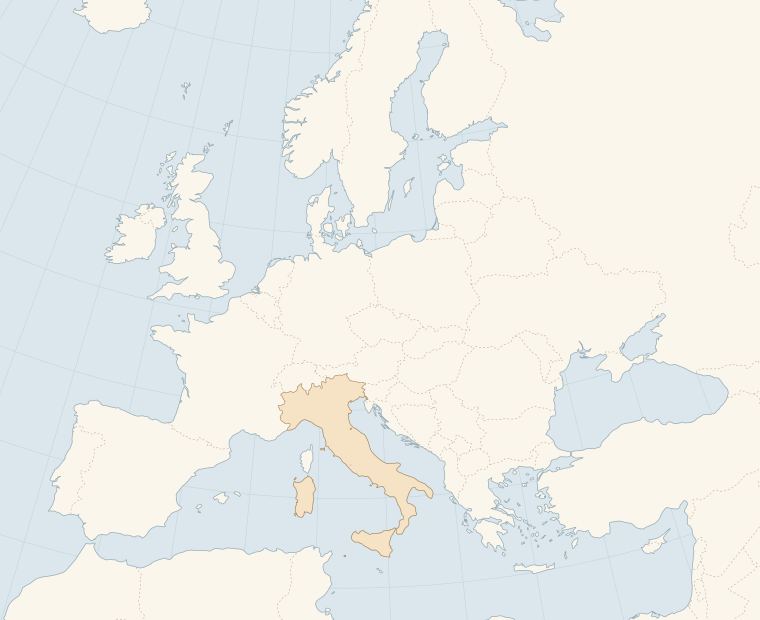
Kraków in legend: the sorcerer Pan Twardowski, the Rome inn, the mirror of Węgrów and the tradition that Doctor Faust studied magic in the city.
Among the cities of Central Europe, Kraków holds a special place in the history of magic. The ancient capital of the Kingdom of Poland and seat of one of the oldest universities on the continent, it was in the fifteenth and sixteenth centuries a renowned centre for the study of astronomy and astrology. It is not surprising that tradition placed here the deeds of a national sorcerer, Pan Twardowski, and the youthful studies of a figure destined to become a European myth, Doctor Faust.
The university of the stars
The University of Kraków, founded by Casimir the Great in 1364 and refounded in 1400, enjoyed a season of great scientific prestige in the fifteenth century. Astronomy and astrology were taught there, disciplines then closely linked with medicine, and the young Nicolaus Copernicus studied there from about 1491 to 1495. The Collegium Maius, the university's oldest Gothic building, preserves astronomical instruments and an early sixteenth-century globe, one of the first to depict the American continent.
This scientific fame had its popular reflection: for many Europeans Kraków was the place where one could learn the secrets of the sky and, with them, the forbidden arts. In the imagination of the time, the step from the science of the stars to magic was a short one. In the sixteenth century the city also welcomed travellers linked to alchemy, and later the Pole Michał Sędziwój, a well-known alchemist also active at the Prague court, stayed there.
Pan Twardowski, the sorcerer on the moon
The story goes that Twardowski, a learned nobleman, signed a pact with the devil to obtain extraordinary knowledge and powers, on condition that the demon could take his soul only in Rome. The sorcerer took good care never to travel to the Eternal City, but one day he entered an inn called, precisely, “Rome”. There the devil caught up with him and dragged him into the sky.
During the flight Twardowski began a hymn to the Virgin, and the devil was forced to let him go. The sorcerer remained suspended on the moon, where, according to tradition, he still lives, with a spider as his only companion, which from time to time descends to earth to bring him news. In 1822 the poet Adam Mickiewicz drew from the legend the ballad Pani Twardowska, one of his best-known early works.
In Węgrów, east of Warsaw, the parish church keeps a mirror known as Twardowski's mirror, with a Latin inscription on its frame, which tradition says the sorcerer used to conjure images. In Kraków, in the Krzemionki district, the quarries and caves where he supposedly carried out his experiments are pointed out. Historians have not identified with certainty any real person behind the legend.
Doctor Faust in Kraków
The historical Faust, Johann Georg Faust, lived in Germany between the late fifteenth century and about 1540 and had a reputation as an astrologer, fortune-teller and charlatan. According to testimony collected in the sixteenth century by Johannes Manlius, reporting words attributed to Philip Melanchthon, Faust studied magic in Kraków, where, it was said, it was then taught publicly. There are, however, no university records to confirm it.
In 1587 the Historia von D. Johann Fausten appeared in Frankfurt, the first book devoted to the sorcerer's pact with Mephistopheles, from which derived Christopher Marlowe's play and, much later, Goethe's Faust. Kraków thus enters the genealogy of one of the great modern myths. The stories of Twardowski and Faust, so similar, tell of the same human desire for limitless knowledge and the same fear of its price.