
The Capuchin Catacombs, the motionless people of Palermo
- Coordinates
- 38.11° N, 13.34° E
- Stop
- Naples and the South
- Reading
- 3 min read
- Next
- Catania, Heliodorus the magician and the stone elephant →
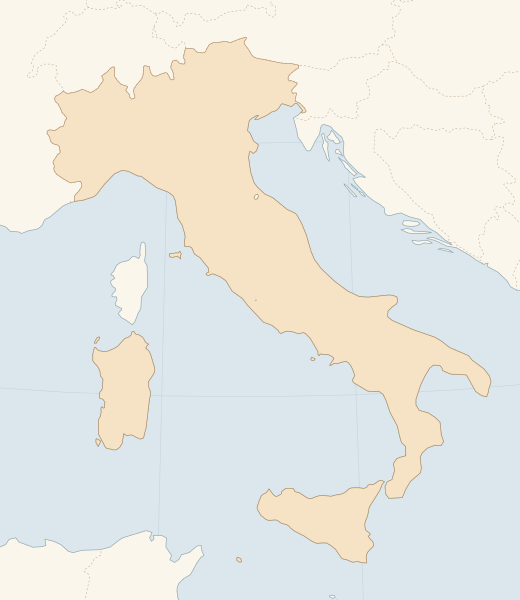
Friars, nobles and children preserved for centuries in the convent corridors: the Capuchin Catacombs of Palermo and the city's relationship with death.
Beneath the Capuchin convent of Palermo, in the district named after it, lies one of the most striking places in Europe. Along corridors cut into the rock stand thousands of mummified or skeletal bodies, dressed in the clothes of their time, hung on the walls, laid in niches or placed in open coffins. The Capuchin Catacombs are not an esoteric place in the strict sense, but they tell in a unique way of the relationship between a city and its dead, between family memory and religious piety.
From friars to citizens
The story begins at the end of the sixteenth century, when the friars, having run out of space in the common grave beneath the church, dug a new crypt. While moving the bodies of their brethren, they noticed that some had been surprisingly well preserved. The first friar to be displayed, according to tradition in 1599, was Silvestro da Gubbio. From then on the Capuchins began to prepare the bodies of their brethren in order to preserve and display them, as a sign of humility and as a reminder of the transience of life.
The privilege was soon sought by lay people as well. Nobles, clergy, professionals and well-to-do families asked to be buried beside the friars, and the convent agreed in exchange for offerings. Relatives came to visit their loved ones, to pray for them and sometimes to change their clothes. Burials continued until 1880, when they were officially banned, with a few exceptions granted in later years.
Preserving the bodies
The most common method was natural desiccation. The bodies were placed for some months in small cells called colatoi, where fluids slowly drained away; then they were washed, exposed to the air and finally dressed in clothes chosen by their families. The results were not uniform: some bodies retain still recognisable features, with hair, beards and even facial expressions, while others have been reduced to skeletons covered by a thin layer of skin.
The most famous case is that of Rosalia Lombardo, a two-year-old girl who died in 1920 and was embalmed by the Palermo physician Alfredo Salafia. Her body appears almost intact, so much so that she has been nicknamed «Sleeping Beauty». For decades the procedure used by Salafia remained a mystery, fuelling legends of every kind, until the discovery of his notes made it possible to understand it in scientific terms.
The order of the dead
The bodies are arranged according to a precise hierarchy. There is the corridor of the friars, that of the priests and that of the professionals, where doctors, lawyers, officers and artists rest, as well as the sections for women, virgins and children. Many labels bear names and dates. The arrangement reflects the society of the time, with its roles and distinctions, extended beyond the threshold of death like a motionless image of the city of the living.
During the nineteenth century the catacombs became a stop on the Sicilian journey, and the French writer Guy de Maupassant described them with a mixture of horror and fascination. Today the place calls for silence. More than a macabre spectacle, it is an archive of faces, fashions and trades, testimony to a culture in which the bond with the dead was expressed also in the wish to go on seeing them. For many Palermo families, death was not a total absence but a presence to be visited.