
The Munaciello, the little monk of Neapolitan homes
- Coordinates
- 40.85° N, 14.25° E
- Stop
- Naples and the South
- Reading
- 3 min read
- Next
- The Siren Parthenope and the mythical origins of Naples →
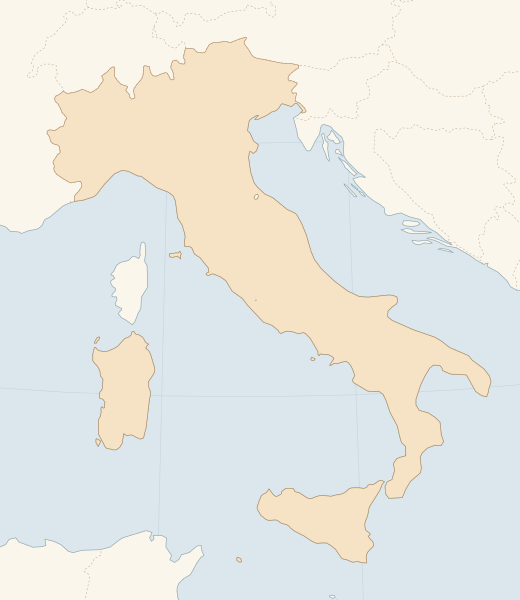
Mischievous or generous, the Munaciello is the most famous household spirit of Naples: origins of the legend, from the well-men to Matilde Serao's tale.
In the houses of Naples, the elderly say, lives a guest whom no one has invited. This is the Munaciello, literally «little monk», a sprite with the appearance of a child or a tiny man, dressed in a habit and hood, sometimes with silver buckles on his shoes. He appears and vanishes suddenly, moves objects, hides keys and plays tricks on the women of the house. But he may also leave coins in a corner of the kitchen or under a pillow. For this reason, in tradition, his presence is both feared and desired.
The story of Caterinella and Stefano
The best-known version of his origins was set down by Matilde Serao in her «Leggende napoletane», published in 1881. The writer tells that around the middle of the fifteenth century, under the reign of Alfonso of Aragon, Caterinella Frezza, daughter of a wealthy cloth merchant, fell in love with Stefano Mariconda, a young stable lad of humble birth. The girl's family opposed the marriage, and the two lovers began to meet in secret, until one night Stefano was murdered by hands that were never identified.
Caterinella withdrew to a convent and gave birth to a small, deformed son. The nuns dressed him in a little monk's habit to hide his body, and people began to call him «lo munaciello». It was said that his passing brought good or bad luck depending on the colour of the hood he wore. When the boy died, in circumstances that remained obscure, popular rumour went on seeing him wander through the houses, gradually turning him into a spirit.
The well-men and realistic explanations
Alongside the romantic tale, many folklorists propose a more concrete origin. In old Naples the underground cisterns were connected to the wells of the palazzi, and their upkeep fell to the pozzari, the well-men. These men, often short in stature so as to move more easily through the tunnels, wore a hooded cloak to protect themselves from the damp. They could climb up through the wells right into the homes, and tradition has it that they took the opportunity to steal small objects or, on the contrary, to leave gifts for some woman of the house.
Hence the ambivalent character of the Munaciello: thief and benefactor, prankster and gallant. The rational explanation has not extinguished the belief but enriched it, linking the sprite to the real geography of the city, with its network of hidden passages beneath the streets. The Munaciello thus becomes the human and mysterious face of underground Naples, which communicates with the houses through invisible openings.
Rules for living together
Popular tradition has developed a real code of conduct towards the Munaciello. Whoever receives his gifts must tell no one, or the good fortune will stop. Whoever suffers his pranks must bear them patiently, without insulting him, so as not to provoke his anger. It is even said that his presence could affect the value of a house: an «inhabited» flat might be considered lucky or, on the contrary, hard to let.
The Munaciello belongs to the large family of European household spirits, like the sprites of the Alpine valleys or the German kobolds, but he has an entirely Neapolitan character. Beside him tradition places the «bella 'mbriana», a benevolent female spirit who protects the home and the family. Together, these presences tell of a city in which the supernatural is part of daily life, and of which many Neapolitans still speak with a mixture of irony and respect.