
Benevento, the janare and the witches' walnut tree
- Coordinates
- 41.13° N, 14.78° E
- Stop
- Naples and the South
- Reading
- 3 min read
- Next
- Castel del Monte, Frederick II's octagon of stone →
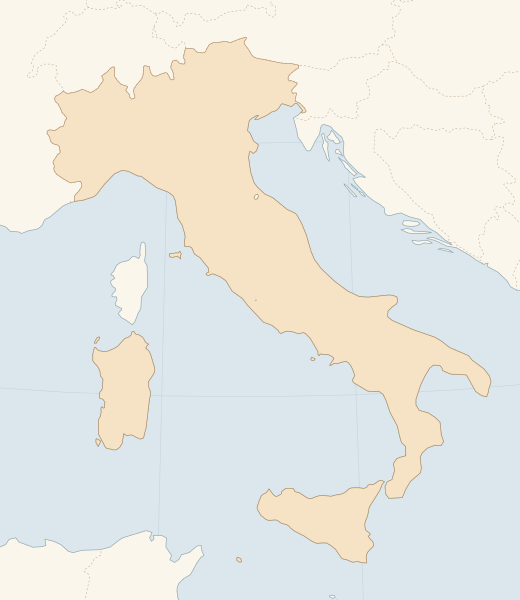
From the Lombard cult around a sacred tree to the witch trials: how Benevento became, in the European imagination, the capital city of witches.
In the folklore of southern Italy witches have many names, but in Benevento they bear a special one: janare. For centuries this Samnite city was regarded throughout Europe as the meeting place of witches par excellence, where they were said to arrive by flight on gathering nights to dance around a great walnut tree on the banks of the river Sabato. This fame, which appears in trials, treatises and folk tales, has precise and surprising historical roots that go back to the early Middle Ages.
The Lombard cult and Saint Barbatus
In the seventh century Benevento was the capital of a powerful Lombard duchy. According to the «Life» of Saint Barbatus, written some time after the events, the local Lombards, though Christian in name, preserved rites of pagan origin. They gathered at a sacred tree, hung an animal skin on it and struck at it while riding on horseback, fighting over the shreds. They also venerated the image of a golden viper. Bishop Barbatus, relying on the gratitude of Duke Romuald after the siege laid to the city by the Byzantine emperor Constans II in 663, obtained that the tree be felled and the viper melted down to make a chalice.
For historians, those rites may reflect ancient Germanic warrior practices, perhaps linked to the cult of Wotan. For popular tradition, however, the felled tree never truly disappeared: the walnut was said to have grown again, evergreen even in winter, and witches from the whole peninsula went on gathering around it, turning an episode of Christianisation into a legend destined to last.
The janare in trials and treatises
The fame of the walnut spread far beyond Samnium. In 1428 in Todi, Matteuccia di Francesco was tried and condemned to the stake; among the charges, she admitted to having flown to the walnut of Benevento. During the fifteenth and sixteenth centuries the reference to the city recurs in several Italian trials, a sign that the place had become a stable element of the witchcraft imagination, shared by inquisitors, preachers and common people.
In the seventeenth century the Benevento physician Pietro Piperno devoted a Latin treatise to the subject, the «De nuce maga beneventana», later translated into Italian as well. The work gathers beliefs, testimonies and cases, and shows how, well into the early modern age, the legend was seriously discussed by educated men who tried to explain it in the light of the theology and medicine of their time.
Who the janare were
The name janara is explained in different ways. Some derive it from Diana, the lunar goddess associated in the Middle Ages with women's night flights; others from ianua, the door, because according to the belief the witch entered houses by slipping under the threshold. Tradition says that, to keep her away, a broom or a little salt was left behind the door: the janara would be compelled to count the bristles or the grains until dawn, when she would lose her power.
Folklore attributed night-time mischief to the janare: plaiting horses' manes, stealing milk, oppressing sleepers. Behind these figures there were often real women, midwives and herb-wise healers, on whom suspicion and fear converged. Today Benevento has made the legend part of its identity, from the name of a famous liqueur created in the nineteenth century to festivals devoted to witches. Yet it remains a complex page of history, in which Christianisation, witch-hunting and popular culture intertwine around a single tree.