
Turin and the double triangle of white and black magic
- Coordinates
- 45.07° N, 7.69° E
- Stop
- Turin and Northern Italy
- Reading
- 3 min read
- Next
- The Gran Madre di Dio in Turin and the legend of the Grail →
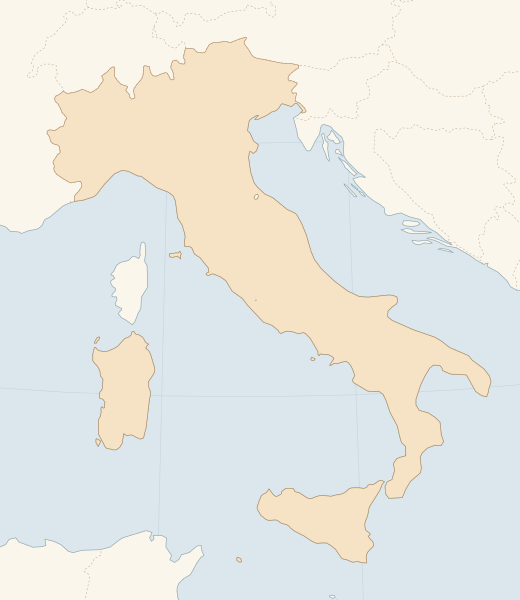
Turin as the shared vertex of two magic triangles with Lyon, Prague, London and San Francisco: the modern origins of a legend and the places tied to it.
For decades Turin has carried a singular reputation: that of the magical city par excellence. According to a popular tradition of uncertain origin, the Piedmontese capital would be the shared vertex of two esoteric triangles, one of white magic with Lyon and Prague, the other of black magic with London and San Francisco. No ancient document attests this geography, which belongs to the twentieth-century literature of mystery, yet the legend has lastingly shaped the way the city is told, described and visited.
The origins of a modern legend
Anyone looking for the roots of the double triangle in Renaissance treatises or in the Savoy archives comes away empty-handed. The formula spread above all in the second half of the twentieth century, through unusual guidebooks, newspaper articles and night-time walks. Some have linked it to Turin's position near the 45th parallel, others to the confluence of the Po and the Dora, which symbolic tradition reads as the meeting of a solar river and a lunar one. These are evocative interpretations, not historical data, and should be told as such.
The city, after all, already had a long familiarity with the marvellous. A learned legend attributes its foundation to an Egyptian prince, Eridanus, who reached the banks of the Po and was devoted to the god Apis, worshipped in the form of a bull. The bull on the city's coat of arms is in fact a canting device linked to the name of the Taurini, the ancient people of the area, but the Egyptian myth accompanied the city's learned image for centuries.
The places of light
Tradition assigns to the positive pole Piazza Castello, with the Royal Palace and the Chapel of the Shroud, and the church of the Gran Madre di Dio on the right bank of the Po. The Shroud, moved to Turin from Chambéry in 1578 at the wish of Emmanuel Philibert of Savoy, did more than anything else to make the city a place of pilgrimage. The chapel designed by Guarino Guarini, with its dome of interlaced arches, is a masterpiece of luminous geometry from the late seventeenth century.
The places of shadow
The negative pole, according to storytellers of mystery, coincides instead with Piazza Statuto, in the western part of the city, facing the sunset. In Roman times this area lay outside the walls, where burials were customarily placed, and not far away, in the early modern period, executions were carried out, as the popular name Rondò della Forca, the Gallows Roundabout, recalls. More recent suggestions have been layered on these memories, such as the one that sees in the monument to the Fréjus tunnel an allusion to the rebel angel.
Between light and shadow lie many other places that visitors pass without knowing: the small brass bull set into the paving beneath the arcades of Piazza San Carlo, where custom has it that you rest your heel for good luck; the dragons and grotesque masks on baroque doorways; the manhole covers which, according to some tales, would mark the entrances to alchemical caves hidden beneath the city. Of these caves, it should be said, there is no documentary evidence whatsoever.
Turin's magic triangle should therefore be read as a collective story, born in recent times and grown by accumulation. Its value lies not in geographical truth, but in its power to make us look with fresh eyes at squares, churches and monuments that possess a documented history far richer than the legend itself, made of architects, sovereigns, relics and collections of the first rank.