
Valcamonica, its rock carvings and the mystery of the Camunian rose
- Coordinates
- 46.03° N, 10.35° E
- Stop
- Turin and Northern Italy
- Reading
- 3 min read
- Next
- Trento and the Council: the Church facing magic and astrology →
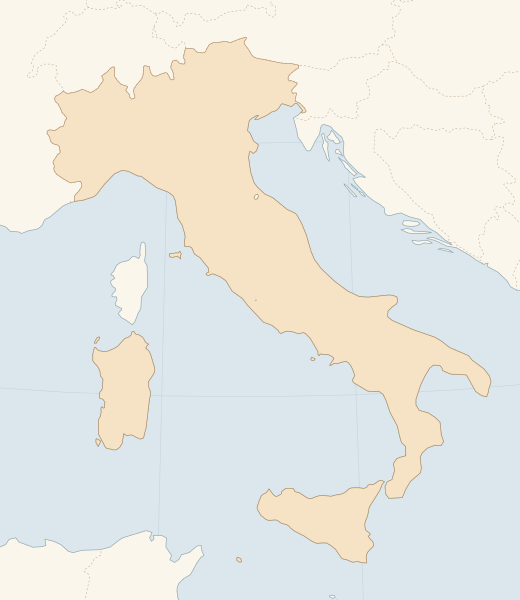
Valcamonica, Italy's first UNESCO site: the rock carvings of the Camunni, the Naquane park and the Camunian rose, an ancient sign that became Lombardy's emblem.
In an Alpine valley of eastern Lombardy, crossed by the river Oglio between Lake Iseo and the Tonale Pass, rocks smoothed by glaciers preserve one of the largest figurative archives of European prehistory. This is Valcamonica, where for thousands of years the inhabitants carved into stone figures of people, animals, weapons, buildings and symbols. In 1979 the valley's rock art became the first Italian site inscribed on UNESCO's World Heritage List.
An archive in stone
The carvings span a very long period, from the age following the retreat of the glaciers to the Iron Age and, to a lesser extent, the Roman and medieval periods. The figures number in the hundreds of thousands, spread over thousands of rocks. They were made mainly by pecking, striking the surface with a tool of harder stone, and today they are best seen in the raking light of morning or evening.
The richest period is the Iron Age, in the first millennium BC, when the valley was inhabited by the Camunni. This people is also remembered by ancient sources: its name appears among the Alpine peoples subdued by Augustus in the inscription of the Trophy of the Alps, erected at La Turbie, above present-day Monaco, at the end of the first century BC.
Naquane and the pitoti
The most visited area is the National Park of Rock Carvings of Naquane, at Capo di Ponte, established in 1955. Here the Great Rock of Naquane displays a dense repertoire of figures: armed warriors, deer, hunters, huts, looms, ploughing scenes. In the local dialect the carved figures are called pitoti, meaning puppets, a name that reveals the inhabitants' familiarity with these ancient presences.
Many scenes appear to have a ritual meaning. The deer, a recurring animal, was probably linked to cults of fertility and renewal, while the figures of worshippers with raised arms suggest gestures of prayer. Archaeologists are cautious in their interpretation: the carvings are not accompanied by texts explaining their meaning, and every reading remains a hypothesis based on comparison with other cultures.
The Camunian rose
Among the carved symbols, one has enjoyed extraordinary fortune: the so-called Camunian rose, a figure made of a closed sinuous line winding around nine cup-marks, the small circular hollows. The name is modern and was given by scholars because of its resemblance to a flower. Several variants exist, with more or less complex shapes, mostly datable to the Iron Age.
Its original meaning remains unknown. It has been interpreted as a solar symbol, as an image of the movement of the heavenly bodies or as a sign of good omen, but none of these readings can be called certain. In 1975 a stylised version of the Camunian rose, drawn by a group of designers led by Bob Noorda, was adopted as the emblem of the Lombardy Region, and today it also appears on the regional flag.
Valcamonica teaches a precious attitude towards ancient symbols. Its rocks show us a complex spiritual world, whose forms we can describe precisely while its meanings largely escape us. The Camunian rose, passing from the prehistoric rock to the emblem of a modern region, bears witness to the power of signs capable of crossing the millennia.