
The Sacra di San Michele, an abbey suspended over the Susa Valley
- Coordinates
- 45.10° N, 7.34° E
- Stop
- Sacred and mysterious places
- Reading
- 3 min read
- Next
- Saint Michael's line: the story of a modern legend →
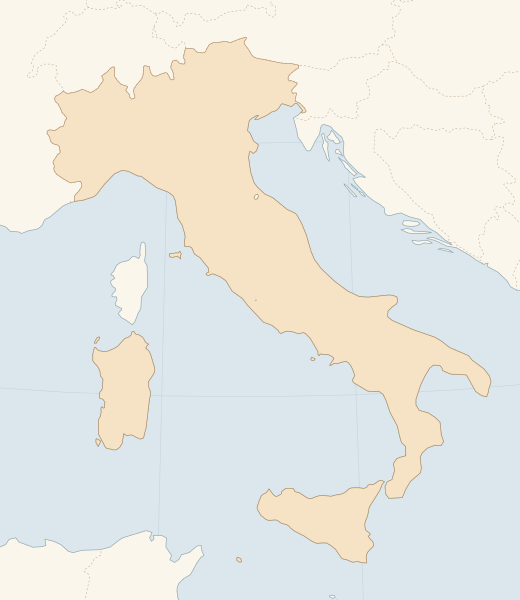
The Sacra di San Michele on Mount Pirchiriano: its founding in the late tenth century, the Stairway of the Dead, the Zodiac Door and the tale of fair Alda.
On the summit of Mount Pirchiriano, at the mouth of the Susa Valley, a stone abbey seems to rise straight out of the rock. It is the Sacra di San Michele, one of the most spectacular religious complexes in Italy and, since 2016, the symbolic monument of Piedmont. For centuries it was a stopping point for pilgrims travelling the Via Francigena between France and Rome, and its profile, visible from afar, still dominates the plain at the gates of Turin.
Origins between history and tradition
The founding of the monastery dates to the last decades of the tenth century, probably between 983 and 987. According to the chronicle written by the monk William in the eleventh century, its promoter was a nobleman from Auvergne, Hugh of Montboissier, who is said to have chosen the site as atonement for a sin. Tradition adds that a hermit, Saint John Vincent, had already built a small chapel dedicated to the archangel on the summit.
A legendary tale relates that the hermit wanted to build the church on a nearby mountain, but that at night angels carried the materials up to Pirchiriano. Beyond the legend, the choice of an isolated peak follows a widespread custom: Saint Michael, leader of the heavenly hosts, was preferably venerated on heights, as on the Gargano and at Mont-Saint-Michel.
The Stairway of the Dead and the Zodiac Door
Visitors climb the Stairway of the Dead, a steep flight of steps partly cut into the rock, which owes its name to the burials once placed along its walls. At the top is the Zodiac Door, a twelfth-century work attributed to Master Nicholas, with carved jambs depicting the signs of the zodiac and several constellations. Latin inscriptions can be read beside the figures.
The church, built on massive foundations to overcome the slope of the mountain, combines Romanesque and Gothic parts. Its grandeur has also fuelled literary suggestions: it is often said to have inspired the abbey of the novel The Name of the Rose, a comparison frequently cited, although the novel never names the Sacra. In the Middle Ages the abbey was a powerful centre, with dependencies in Italy, France and Spain, and housed a lively activity of study and manuscript copying.
The legend of fair Alda
From the complex rises the tower known as that of fair Alda. The legend tells that a young woman, pursued by mercenary soldiers, threw herself into the void calling on the Virgin and was set down unharmed in the valley by angels. Wanting to repeat the wonder out of vanity, before the incredulous villagers, she leapt a second time and fell to her death. The tale, handed down orally, warns against the pride of those who demand a miracle.
After a long decline in the modern age, in 1836 King Charles Albert entrusted the abbey to the Rosminian fathers of the Institute of Charity, who still look after it. Members of the House of Savoy also rest in the church, moved there at the king's wish. Today the Sacra is a destination for visitors and pilgrims, and in modern accounts it is often named as one of the points of the so-called Saint Michael's line, an alignment that belongs to legend rather than to history.