
Cagliostro, the count born in the alleys of Palermo
- Coordinates
- 38.12° N, 13.36° E
- Stop
- Naples and the South
- Reading
- 3 min read
- Next
- The Beati Paoli, the secret sect of Palermo →
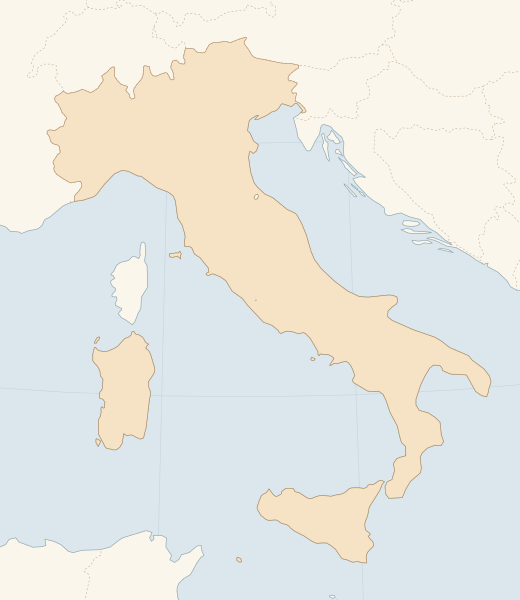
Giuseppe Balsamo, born in Palermo in 1743, became Count Cagliostro: healer, freemason and adventurer famous across the Europe of the Enlightenment.
On 2 June 1743, in the working-class district of the Albergheria in Palermo, Giuseppe Balsamo was born. Few could have imagined that this boy from a modest family would become, under the name of Count Alessandro di Cagliostro, one of the most controversial figures of eighteenth-century Europe. Healer, alchemist, founder of a Masonic rite, frequenter of courts and salons, he ended his days in a papal prison. His life remains suspended between adventure, imposture and spiritual quest, and historians still debate it.
The Palermo years
Having lost his father early, young Giuseppe was entrusted to the religious and spent a period with the Brothers Hospitallers of Saint John of God in Caltagirone, where according to tradition he learned the rudiments of pharmacy and chemistry. Undisciplined and ingenious, he soon left the convent. In Palermo he became known for a few swindles: the most famous, reported by his biographers, involves a goldsmith persuaded to search for treasure hidden in a cave outside the city, who lost his money. To escape the consequences, Balsamo left Sicily.
Then began a wandering life. In Rome, in 1768, he married Lorenza Feliciani, who accompanied him for years on his travels under the name of Serafina. Together they crossed Spain, France, England, Germany, Russia and Poland, often changing identities and titles, welcomed at times as foreign nobles, at others as charlatans to be sent away.
Egyptian freemasonry and European fame
In 1777 in London Cagliostro was admitted to a Masonic lodge. A few years later he devised his own system, the Egyptian rite, which he attributed to the legendary Grand Copt and which promised its followers moral and physical regeneration. The rite also admitted women, in lodges led by Serafina. In Strasbourg and then in Paris his fame as a healer drew crowds of admirers, but also the hostility of many physicians and intellectuals, who considered him an impostor.
In 1785 he was caught up in the famous affair of the queen's necklace, a scandal of jewels and forged messages that seriously damaged the image of Marie Antoinette. Imprisoned in the Bastille, he was acquitted by the Parlement of Paris in 1786, but was nevertheless expelled from France and resumed his wanderings between England, Switzerland and Italy.
Goethe in Palermo and the end at San Leo
In April 1787, during his Italian journey, Johann Wolfgang Goethe wished to meet Balsamo's family in Palermo. In his «Italian Journey» he tells how he introduced himself under a pretext to the adventurer's mother and sister, who lived in poverty, and how he was moved by them. The episode shows how Cagliostro's fame had already turned a real man into an almost literary character, whom one of Europe's greatest writers wanted to know at his roots.
Back in Rome in 1789, Cagliostro was arrested by the Inquisition on charges of heresy, Masonic activity and magical practices. In 1791 his death sentence was commuted to life imprisonment, to be served in the fortress of San Leo, in Montefeltro, where he died on 26 August 1795. Palermo still tells his story in the alleys of the Albergheria. Cagliostro remains the symbol of a century that, while celebrating reason, anxiously sought the marvellous, and found in him both a master and a scapegoat.