
Lourdes and the grotto of Massabielle at the foot of the Pyrenees
- Coordinates
- 43.10° N, 0.06° W
- Stop
- Sacred and mysterious places
- Reading
- 3 min read
- Next
- Montserrat, the serrated mountain and the Moreneta →
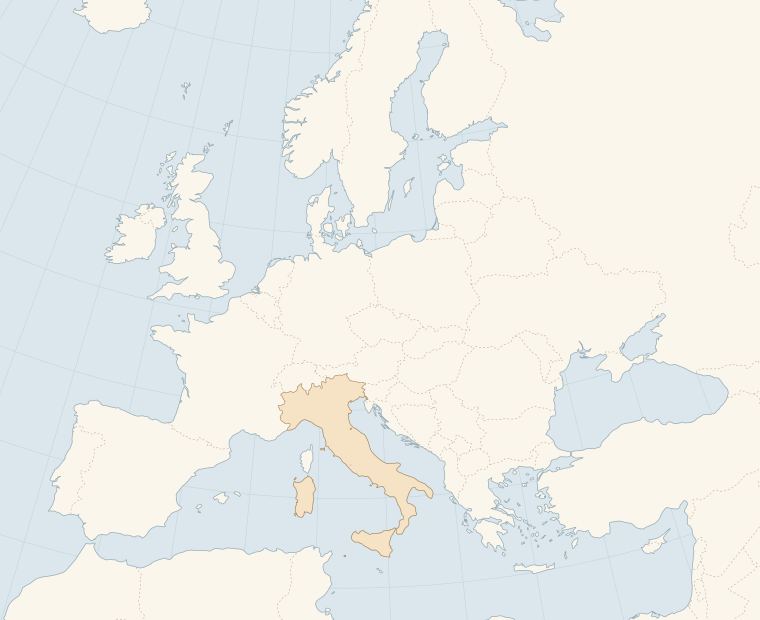
Lourdes since 1858: Bernadette Soubirous, the eighteen apparitions in the grotto of Massabielle, the basilicas and the birth of a great Marian shrine.
Until the middle of the nineteenth century Lourdes was a small town in the French Pyrenees, dominated by a castle and crossed by the Gave de Pau river. Within a few decades it became one of the most visited shrines in the Catholic world, drawing millions of pilgrims each year. At the origin of this transformation lies the account of a fourteen-year-old girl, daughter of an impoverished miller, and of a grotto by the river called Massabielle, the old rock.
Bernadette and the eighteen apparitions
On 11 February 1858 Bernadette Soubirous went with her sister and a friend to gather wood near the grotto. According to her account, in a niche in the rock a young woman appeared to her dressed in white, with a blue sash and a yellow rose on each foot. Between February and July of that year Bernadette reported eighteen apparitions, the last on 16 July, while the crowd of onlookers grew day by day.
On 25 March, when asked her name, the Lady is said to have answered in the local dialect, in a form handed down as «Que soy era Immaculada Councepciou», that is, I am the Immaculate Conception. The dogma had been proclaimed by Pius IX just four years earlier, in 1854, and the phrase struck the parish priest, convinced that the girl could not know its meaning. During one of the apparitions Bernadette dug into the ground of the grotto, where the spring that still flows there emerged.
Recognition and the life of Bernadette
The civil authorities greeted the events with suspicion, and for a time access to the grotto was forbidden. After an inquiry lasting four years, in 1862 the Bishop of Tarbes, Bertrand-Sévère Laurence, declared that the faithful could regard the apparitions as authentic. Bernadette later entered the congregation of the Sisters of Charity of Nevers, where she lived far from fame until her death in 1879. She was proclaimed a saint in 1933, and her body is kept in the chapel of the convent at Nevers.
The name of Lourdes is also linked to healings attributed to the intercession of the Virgin. A medical office was set up in 1883 to examine them, and over time the Church has recognised about seventy healings as miraculous, a very small number compared with the reports received. These recognitions belong to the sphere of faith and church discipline, and should not be understood as a promise to those who visit the shrine.
The basilicas and the shrine
Above the grotto the Basilica of the Immaculate Conception, in neo-Gothic style, was built between 1866 and 1871, joined lower down in 1889 by the Basilica of the Rosary, in neo-Byzantine forms, with its great curving ramps. In 1958, for the centenary of the apparitions, the underground Basilica of Saint Pius X was inaugurated, a huge reinforced concrete space able to hold tens of thousands of people.
Today the shrine also includes the baths, where pilgrims immerse themselves in the water of the spring, and the esplanade of processions, where every evening the torchlight procession takes place, with thousands of lit candles. Whatever one's faith, Lourdes represents a decisive chapter in the history of modern Marian devotion and in the way a small place can become a centre of international pilgrimage.