
Lake Avernus and the Phlegraean Fields, gateway to the underworld
- Coordinates
- 40.84° N, 14.08° E
- Stop
- Naples and the South
- Reading
- 3 min read
- Next
- Cagliostro, the count born in the alleys of Palermo →
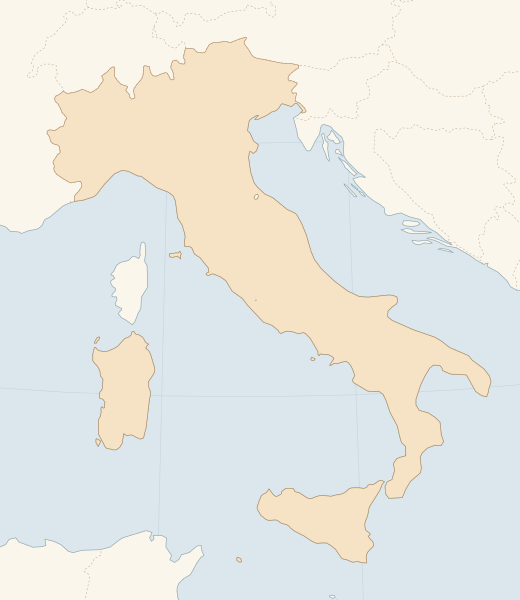
For Greeks and Romans the crater of Avernus was the entrance to the afterlife: myths, classical texts and Phlegraean sites linked to the realm of the dead.
A few kilometres west of Naples, in the heart of the Phlegraean Fields, lies an almost circular lake enclosed by the walls of an ancient crater. This is Lake Avernus, which for Greeks and Romans was one of the entrances to the realm of the dead. The surrounding landscape, marked by fumaroles, hot springs and ground that rises and falls through bradyseism, seemed made to evoke the underworld. The very name of the region comes from Greek and means «burning», for the fires and vapours that rise from the earth.
A lake without birds
The ancients explained the name Avernus with the Greek aornos, «without birds»: it was believed that the lake's exhalations were so noxious that they killed the birds flying over it. Lucretius, in «De rerum natura», discusses this very phenomenon, seeking a natural explanation for it. The geographer Strabo reports that, according to older authors, the shores of the lake were covered with thick, dark woods and that an oracle of the dead stood there, where souls were summoned and questioned about the future.
Some ancient authors also placed here the nekyia of the Odyssey, the episode in which Odysseus summons the shades of the dead, and the mysterious people of the Cimmerians, who according to the historian Ephorus lived in underground dwellings without ever seeing the light of the sun. These were learned traditions, often contradicting one another, but they helped make Avernus a place charged with sacredness and dread.
The descent of Aeneas
Virgil definitively sealed the lake's fame. In the sixth book of the Aeneid, Aeneas and the Sibyl enter the underworld through a deep cave near Avernus. The Sibyl warns the hero that going down is easy, while coming back is extremely hard: «facilis descensus Averno», runs the line, taken up over the centuries as a proverb about how easily one falls into error and how hard it is to return to the light.
Before the descent, Aeneas must find the golden bough, sacred to Proserpina, which will allow him to cross the realm of the dead and come back. The image has fascinated philologists and anthropologists: James Frazer named after the golden bough his great work on magic and religion, published at the end of the nineteenth century, in which the Virgilian motif becomes the starting point for investigating tree rites and sacred kingship.
From myth to history
The real history of the lake is just as rich. In 37 BC Marcus Vipsanius Agrippa, Octavian's general, turned Avernus and nearby Lake Lucrinus into a great naval harbour, the Portus Iulius, connected to the sea by canals. To link the lake with Cumae a long tunnel was dug, the Grotta di Cocceio, named after the architect Lucius Cocceius Auctus. On the eastern shore stand the remains of a large bath building, traditionally called the Temple of Apollo.
Today Avernus is a quiet lake surrounded by vineyards and woods, and the nearby Solfatara of Pozzuoli reminds us with its vapours that the volcano is still alive. Yet one need only know its history to see in that sheet of water the ancient gateway to the afterlife, and to understand how the restless land of the Phlegraean Fields offered the ancients the ideal landscape in which to imagine the meeting of the living and the dead.