
The Sibyl's Cave and the Legends of the Sibillini Mountains
- Coordinates
- 42.86° N, 13.26° E
- Stop
- Rome and Central Italy
- Reading
- 3 min read
- Next
- Spoleto, the Law of the Sacred Grove and the Hermits of Monteluco →
The kingdom of the Apennine Sibyl, Guerrin Meschino, Antoine de la Sale's journey in 1420 and Pilate's lake: the myths of the Sibillini Mountains.
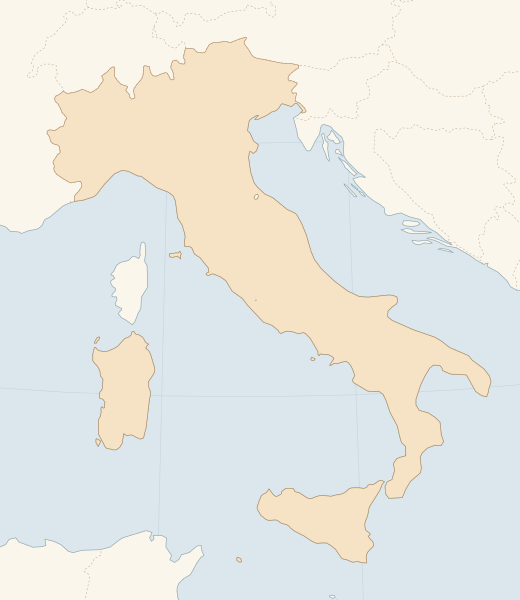
Between the Marche and Umbria stretches a mountain range that bears a prophetess in its name: the Sibillini Mountains. On the summit of Monte Sibilla, at over two thousand metres, there was a cave long believed to be the entrance to the underground kingdom of an enchantress queen. Not far away, beneath Monte Vettore, a small glacial lake was linked to another dark legend. These mountains have drawn knights, travellers and the curious from all over Europe.
The queen beneath the mountain
In antiquity the sibyls were inspired prophetesses, like the one at Cumae recalled by Virgil. In the Middle Ages, in the central Apennines, a tradition arose of a Sibyl who had not died but lived in an underground palace with a retinue of maidens, among gardens and riches. Whoever entered her realm could remain there in endless pleasure but risked losing his soul, because time flowed differently there and leaving was allowed only within a fixed term.
In the early fifteenth century the Florentine writer Andrea da Barberino told, in the romance Guerrin Meschino, of his hero's descent into the cave. Guerrino sought news of his own origins there and resisted for a year the seductions of the queen and her handmaidens. The romance enjoyed enormous popularity and made the cave famous throughout Italy.
The journey of Antoine de la Sale
In May 1420 the French writer Antoine de la Sale climbed the mountain and visited the entrance to the cave. Years later he described the experience in a text known as the Paradise of Queen Sibyl, included in his work La Salade. He recorded precisely the landscape, the inscriptions left by visitors and the tales of the local shepherds, without, however, venturing into the deepest parts.
His account includes the story of a German knight who is said to have lived for a long time in the Sibyl's kingdom and then, repentant, gone to Rome to obtain the pope's forgiveness. Many scholars have noted the similarity with the German legend of Tannhäuser and the Mountain of Venus, a sign that these motifs circulated across Europe.
Pilate's lake
At the foot of Monte Vettore, at almost two thousand metres, lies the Lake of Pilate. According to legend, the body of Pontius Pilate, shut in a cart drawn by buffaloes left to roam free, ended up in these very waters. In the Middle Ages the lake became a destination for necromancers who climbed up to consecrate magic books, so much so that the authorities of Norcia forbade access under severe penalties.
Today the lake is also known for a tiny red crustacean, Marchesoni's fairy shrimp, which lives only here and can be seen in the shallow waters during summer. The Sibyl's cave, on the other hand, was blocked during the twentieth century by collapses and works, and its interior can no longer be visited. What remains is the fallen entrance and the view over the valley, enough to explain why this place struck the imagination of so many.
Since 1993 the area has been protected by the Sibillini Mountains National Park. The legends of the Sibyl and of Pilate are part of the heritage of these towns, from Norcia to Montemonaco, and show how a mountain can become a threshold between the human world and the realm of wonder, between faith and temptation.