
The Mithraea of Rome: the Underground Cult of the God Mithras
- Coordinates
- 41.89° N, 12.50° E
- Stop
- Rome and Central Italy
- Reading
- 3 min read
- Next
- The Lapis Niger in the Forum: the Black Stone and Romulus's Tomb →
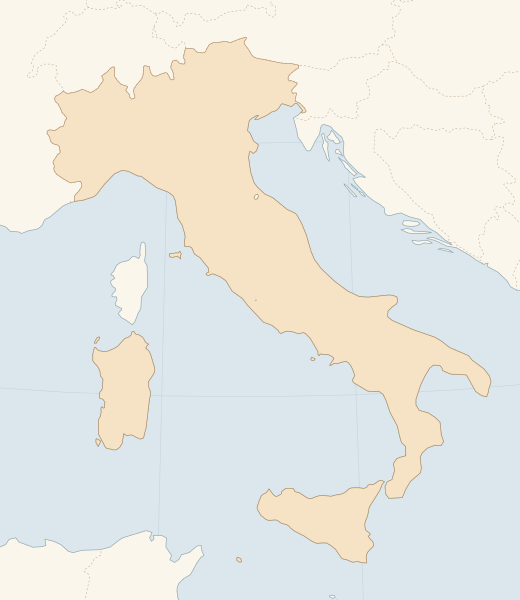
San Clemente, Santa Prisca, the Circus Maximus and the Baths of Caracalla: where Mithras's followers met and what their images still tell us today.
Beneath the streets of Rome lie narrow, elongated rooms with benches along the sides and a sacred image at the far end. These are the mithraea, meeting places of the followers of Mithras, a mystery religion that spread through the empire between the first and fourth centuries AD. Its followers were mainly soldiers, merchants, officials and freedmen. No sacred texts of the cult survive, but the archaeological remains of Rome and Ostia allow its appearance to be reconstructed with remarkable precision.
The cave as an image of the world
The mithraeum imitated a cave and was often created in underground or windowless rooms. The Neoplatonic philosopher Porphyry, in the third century, explained that the cave was chosen as an image of the cosmos. Along the sides ran two masonry benches where the faithful sat for communal meals, while the end wall held the main scene. These were small spaces, suited to groups of a few dozen people who knew one another and shared a bond of loyalty.
The central scene is always the same: Mithras, wearing a Phrygian cap, slays a bull. Around him appear a dog and a snake approaching the wound, a scorpion, a raven and two torchbearers, Cautes and Cautopates, one with the torch raised and one lowered. The Sun and Moon are often seen above. Scholars still debate the precise meaning of this image, read in turn as a cosmic, astronomical or life-renewing allegory.
The places to know in Rome
The most visited mithraeum lies beneath the basilica of San Clemente, reached by descending through a medieval and an early Christian church: the altar with the bull-slaying scene is still in place. On the Aventine, beneath Santa Prisca, paintings survive showing a procession of worshippers and painted inscriptions. Under the Circus Maximus a mithraeum was discovered in the 1930s, while the one in the Baths of Caracalla, brought to light in 1912, is the largest known in the city.
At Palazzo Barberini there is also a mithraeum with a fresco of the bull-slaying surrounded by smaller scenes and the signs of the zodiac. The total number of Roman mithraea is uncertain, but each new excavation tends to add to it. Nearby Ostia, the port of Rome, has yielded a great many, some with mosaic floors of great interest.
Seven grades and seven planets
Sources and inscriptions show that the faithful were arranged in seven grades: Raven, Bridegroom, Soldier, Lion, Persian, Sun-Runner and Father. A mosaic in the Mithraeum of Felicissimus at Ostia links each grade to a planet, from Mercury to Saturn. This structure reflected the idea of the soul's ascent through the heavenly spheres, a theme common in late antique religious thought, and gave the community a precise hierarchy.
The cult declined at the end of the fourth century, with imperial laws against pagan rites. Some mithraea were destroyed or filled with earth, others remained buried beneath later buildings, including Christian churches. It is precisely this layering, as at San Clemente, that has allowed them to reach us in good condition.
Visiting a mithraeum means literally descending beneath visible Rome and encountering a religion that for centuries competed with Christianity. With no sacred texts, the stone itself must speak: its images tell of light and darkness, of sacrifice and renewal, of loyalty among companions, and show how rich and plural the spiritual landscape of the empire was.