
The Sacred Grove of Bomarzo and the Monsters of Vicino Orsini
- Coordinates
- 42.49° N, 12.25° E
- Stop
- Rome and Central Italy
- Reading
- 3 min read
- Next
- Montesiepi and the Sword in the Stone of Saint Galgano →
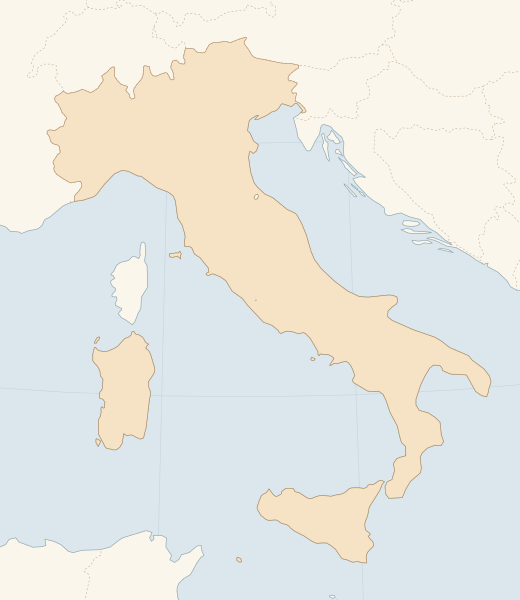
Ogres, dragons, sphinxes and a leaning house carved in peperino stone: history, inscriptions and meanings of Vicino Orsini's Sacred Grove at Bomarzo.
In the Tuscia region near Viterbo, below the village of Bomarzo, an oak wood hides gigantic figures carved in the rock: an ogre with a gaping mouth, a war elephant, a dragon attacked by dogs, a tortoise topped by a winged figure. This is the Sacred Grove, also known as the Park of the Monsters, created in the second half of the sixteenth century by Prince Pier Francesco Orsini, known as Vicino. No other Renaissance garden resembles this place, designed to astonish and to provoke thought.
A soldier prince and man of letters
Vicino Orsini was born in 1523 and died in 1585. A man of arms, he fought in the wars of his time and knew captivity, but he was also a passionate reader of poetry and philosophy. Work on the grove began around the middle of the century and continued for many years. The design is often linked to the architect Pirro Ligorio, but the attribution is not securely documented, and the prince himself seems to have guided its conception.
A small temple inside the grove is traditionally linked to the memory of his wife, Giulia Farnese, who died around 1560. This has suggested a garden of memory and mourning, but the inscriptions also speak of wonder, of deceiving the senses and of unburdening the soul. At the entrance an inscription declares that the place was made «sol per sfogare il core», that is, only to set the heart free.
The figures of the grove
The sculptures were carved directly from boulders of peperino, a volcanic stone found on the site, which explains their unusual proportions and irregular arrangement. The Ogre is the most famous: its mouth forms a room with a stone table, and on the upper lip one reads «Ogni pensiero vola», every thought flies. The phrase perhaps alludes to the echo that distorts voices inside, or to the idea that thoughts are lost within that mouth.
Nearby stands a small house deliberately built on a slant, which disorients anyone who enters. There is also a giant tearing apart an opponent, an elephant with a tower on its back lifting a soldier, sphinxes, a Pegasus and a Cerberus. Many scholars have seen references to Ariosto's Orlando Furioso and to the Poliphilo, an illustrated romance printed in Venice in 1499 that describes a symbolic journey through gardens and ruins.
An initiatory path or a learned game
The grove has been read in many ways: as an initiatory path towards knowledge, as an allegory of life and death, as a collection of literary allusions for an audience of learned friends. No interpretation is final, because Vicino left no written programme. His letters, however, show a taste for paradox and wonder typical of Mannerist culture.
After the prince's death the grove was abandoned and vegetation covered the statues for centuries. In the twentieth century it attracted artists and writers, and from 1954 the Bettini family bought it and saw to its restoration, opening it to the public. Today it is one of the most visited places in Tuscia, frequented by families, scholars and art lovers.
Walking among the monsters of Bomarzo means accepting an invitation to get lost. The Sacred Grove does not explain itself: it leaves visitors the task of giving meaning to the figures, inscriptions and paths. Therein lies its modernity, and also its link with the great tradition of the garden as a place of thought.